

An arm lift is a surgical procedure that removes excess skin and fat from the upper arms to restore a firmer, more toned contour. It is especially effective after weight loss or with age-related skin laxity.
Dr. Ben Naceur Radhi uses precise techniques to reshape the arms while preserving natural proportions. The approach may include liposuction combined with skin tightening for optimal, balanced results.
Ideal candidates have significant skin laxity, stable weight, and good overall health. This procedure is suited for patients seeking a long-term solution beyond non-surgical treatments.
The procedure is performed under general anesthesia, with incisions placed along the inner arm for discretion. Recovery takes a few weeks, with gradual return to normal activities and lasting improvement in arm contour.

Arms constitute frequently neglected zone until significant laxity appears. Massive weight loss, aging, or genetic predisposition create unsightly skin excess. The arm lift in Tunisia offers definitive correction of this ptosis. Dr Ben Naceur Radhi masters brachial dermolipectomy techniques ensuring toned, proportionate arms.
Motivations are mainly aesthetic with functional component. Skin excess masks musculature and creates unsightly folds. Some patients report dressing discomfort and intertriginous irritations.
• Major skin ptosis post-weight loss with draping skin
• Involutive skin laxity without exercise improvement
• Associated lipodystrophy with skin laxity
• Arm asymmetry by unequal weight loss
Ideal candidate presents significant skin laxity justifying resection. Body weight stable six months minimum. Typical age ranges thirty to sixty years.
• Stable weight without major weight loss project
• Absence of upper limb lymphatic pathology
• Acceptance of axillo-brachial cicatricial mark
• Understanding that liposuction alone insufficient
• Realistic motivation without absolute perfection
Dr Ben Naceur Radhi evaluates skin excess importance, residual skin quality, and possible subcutaneous fat presence. These elements determine resection extension.
Evaluation lasts forty-five minutes. Dr Ben Naceur Radhi analyzes arms in different positions to evaluate ptosis severity.
• Skin excess measured by pinch test
• Residual skin elastic quality
• Associated subcutaneous fat presence
• Ptosis extension to forearm eventually
Standardized photographs taken. Operative plan defines minimal necessary incision and liposuction association opportunity.
Dr Ben Naceur Radhi performs intervention in hospital facility with overnight stay. General anesthesia systematic.
• Incision: longitudinal internal arm from axilla to elbow according to excess
• Dissection: sub-cutaneous for mobilizing excess tissue
• Liposuction: if residual subcutaneous fat associated
• Resection: elliptical skin and fatty excess excision
• Closure: layered in inverted T at axilla to avoid groove
• Mini-lift: limited axillary incision for light ptosis
• Complete lift: internal proximal third incision for moderate ptosis
• Extended lift: incision to elbow for major ptosis
• T-lift: forearm extension for distal laxity
General anesthesia obligatory for lateral position and duration. Intervention two to three hours depending on bilateral extension.
Scar situated on arm internal face. Visible when arm separated from body. Quality depends on closure tension and skin quality. Social discretion relative. Long sleeves necessary three to four weeks. Scar fades progressively over twelve to eighteen months.
Arm lift carries specific risks linked to upper limb vascularization.
• Hematoma requiring surgical evacuation
• Lymphedema by axillary lymphatic pathway impairment
• Border necrosis by excessive closure tension
• Axillary scar dehiscence by early mobilization
• Hypertrophic or keloid scarring
• Cicatricial retraction limiting arm abduction
• Internal arm cutaneous nerve impairment by deep dissection
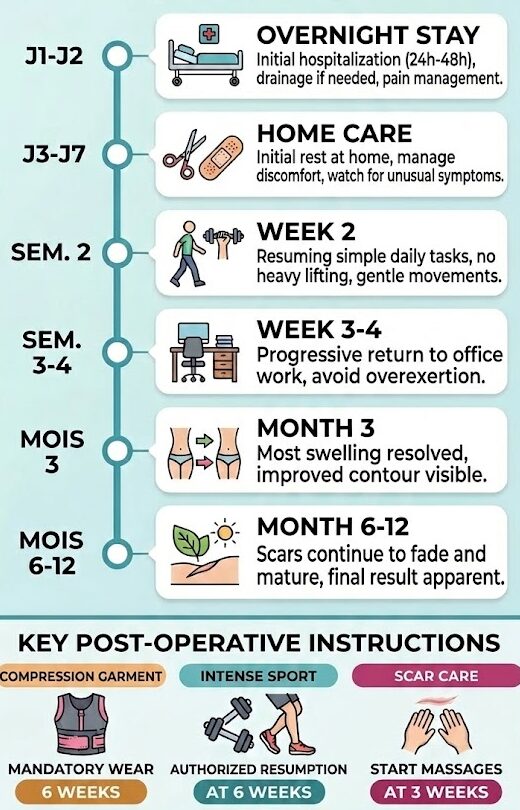
Hospitalization with drainage and arm immobilization
Drain removal, moderate pain with movements
Autonomy activities resumption, arms along body
Suture removal, light activities resumption
Work return, avoidance of abduction movements
Complete edema resolution and motor recovery
Arm lift offers permanent results once weight remains stable. Skin resection definitive. Harmonious arm contour restored. Patients report better ease in sleeveless clothing. Confidence restored for arm-raising activities. Result appears natural as it respects limb proportion.
Dr Ben Naceur Radhi developed limb contouring surgery expertise. Skin resection technique training allows obtaining harmonious results.
• Mastery of minimal necessary incisions
• Preservation of axillary lymphatic structures
• Tension-reducing closure techniques
• Conservative approach avoiding overcorrection complications
The arm lift in Tunisia constitutes limb aesthetic surgery offering transformative results. Dr Ben Naceur Radhi proposes adapted techniques for each ptosis degree. Patients regain toned, proportionate, harmonious arms with overall silhouette.
Discomfort moderate. Tension sensation with movements dominates early days. Prescribed analgesics ensure sufficient comfort.
Return possible at two to three weeks. High collars conceal residual traces.
Situated on arm internal face, visible only when arm separated. Fades progressively but remains perceptible upon close examination.
Yes, if residual fat present. Liposuction precedes skin resection for optimal final contour.
Yes, if weight remains stable. Excised skin does not regrow. Major weight gain may distend remaining skin.
Yes, compressive sleeve recommended four weeks to limit edema and optimize skin retraction.
Possible but rare with lymphatic axis preservation. Compression and manual lymphatic drainage prevent this complication.
A technique to remove localized fat deposits and improve body contours.

A technique that enhances and reshapes the buttocks using autologous fat transfer.

To remove excess abdominal skin and restore firmness to the abdominal wall.
We place experience, medical rigor, and technical precision at the service of safe and personalized care.

