

Blepharoplasty is a surgical procedure designed to correct signs of eyelid aging by removing excess skin and repositioning or removing orbital fat. The goal is to restore a refreshed, natural gaze while maintaining eyelid function.
This procedure addresses common eyelid changes that occur with age, including excess upper eyelid skin, protruding lower eyelid fat, and loss of tissue tone. These changes can create a tired or aged appearance and, in some cases, may even limit the visual field. Blepharoplasty improves both eyelid function and facial harmony, enhancing the overall brightness of the gaze.
Dr. Ben Naceur Radhi applies a comprehensive, anatomy-based approach to blepharoplasty. During preoperative evaluation, the eyelid skin, muscle, and fat compartments are carefully assessed to create a personalized surgical plan.
Techniques are selected to preserve eyelid physiology, including conservative skin and muscle resection, selective repositioning or removal of fat pockets, preservation of the orbicularis muscle for natural eyelid closure, and protection of lacrimal function to minimize the risk of dry eye.
Blepharoplasty can be performed under local anesthesia with sedation or light general anesthesia, depending on the extent of the procedure. Upper eyelid incisions are discreetly placed within natural folds, while lower eyelid treatment may use a transconjunctival approach to avoid visible scars. Recovery is typically rapid, with minimal discomfort and a quick return to social and professional activities.

Eyelids represent the facial zone where aging installs most precociously. From the thirties onward, changes appear. Upper eyelid skin excess creates heavy appearance. Lower eyelid fat pockets draw permanent dark circles. Blepharoplasty in Tunisia offers targeted correction of these stigmata. Dr Ben Naceur Radhi masters eyelid tightening techniques ensuring rejuvenated, natural gaze.
Motivations are both aesthetic and functional. Some women report real visual discomfort when upper skin excess masks superior visual field. Others suffer from tired appearance despite sufficient rest.
• Upper eyelid dermatochalasis masking palpebral fold
• Pre-tarsal fat pockets creating puffy appearance
• Hollow dark circles associated with lower fat pockets
• Slight ectropion or lower eyelid ptosis
Ideal candidate presents isolated eyelid excess or fat with sufficient skin elasticity. Typical age ranges thirty-five to sixty-five years.
• Absence of severe dry eye or dry eye syndrome
• Controlled blood pressure and absence of coagulation disorders
• Smoking cessation recommended four weeks before intervention
• Realistic expectations concerning gaze improvement only
Dr Ben Naceur Radhi evaluates lacrimal function, brow position, and orbital septum integrity. These elements determine surgical approach.
Evaluation lasts forty-five minutes. Dr Ben Naceur Radhi analyzes all four eyelids globally. He distinguishes true skin excess from associated brow ptosis.
• Upper excess skin quantity measured by pinch test
• Prolapse of three orbital fat compartments
• Orbicularis muscle and orbital septum state
• Brow position and possible lifting indication
Standardized photographs taken. Operative plan distinguishes upper from lower blepharoplasty, often treated simultaneously.
Dr Ben Naceur Radhi performs intervention as outpatient under local anesthesia deepened or light general depending on extent.
• Incision in natural palpebral fold, invisible from distance
• Measured skin and muscle resection to the millimeter
• Orbital septum opening and conservative prolapsed fat removal
• Layered closure with fine intradermal sutures
• Trans-conjunctival approach without skin scar for young patients
• Sub-ciliary incision near lashes if associated skin excess
• Medial, central, and lateral fat pocket repositioning or removal
• Nasojugal groove treatment by fat grafting or laser if necessary
Orbicularis muscle preservation maintains eyelid closure and natural expression.
Local anesthesia with sedation preferred for intraoperative eyelid closure monitoring. General reserved for associations with other procedures. Duration forty-five minutes to ninety minutes depending on four eyelids treated.
Upper scar perfectly hidden in natural palpebral fold. Lower trans-conjunctival approach totally invisible. Sub-ciliary incision, when necessary, becomes imperceptible after six months thanks to strategic placement and meticulous closure. Social discretion rapid. Sunglasses conceal possible bruising during ten days.
Blepharoplasty carries specific ocular risks worth knowing.
• Keratoconjunctivitis by transient dry eye
• Ectropion or lower eyelid retraction by excessive resection
• Rare retrobulbar hematoma requiring urgent decompression
• Residual asymmetry despite control measures
• Prolonged edema in thin skin patients
• Hypertrophic scarring exceptional
• Hematoma requiring evacuation
• Wound dehiscence
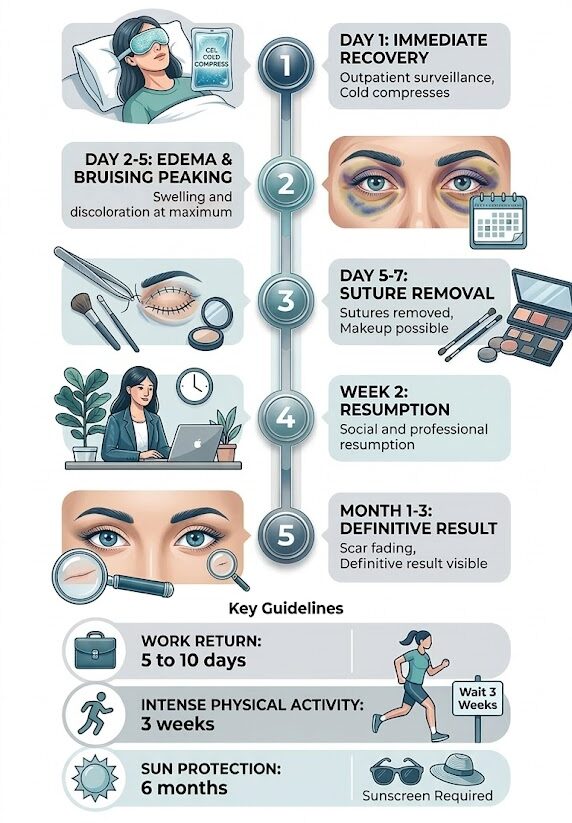
Outpatient surveillance, cold compresses
Edema and bruising peaking
Suture removal, makeup possible
Social and professional resumption
Scar fading and definitive result
Blepharoplasty offers permanent results. Skin and fat excision definitive. Gaze regains openness and brightness. Patients report improved self-image and disappearance of tired appearance. Result appears natural, preserving ethnic characteristics.
Dr Ben Naceur Radhi developed specific expertise in palpebral surgery. Training in functional and aesthetic techniques allows achieving harmonious, secure results.
Blepharoplasty in Tunisia constitutes delicate facial surgery offering transformative gaze results. Dr Ben Naceur Radhi proposes modern techniques combining security and aesthetics. Patients regain open, bright, harmonious eyes.
Discomfort minimal. Tension and burning sensation first days. Prescribed analgesics sufficient.
Return possible at five to ten days. Makeup conceals residual traces.
Upper scar invisible in natural fold. Lower trans-conjunctival totally without trace. Sub-ciliary becomes imperceptible.
Yes, for skin and fat excision. Aging continues but from rejuvenated base.
Brow lift or facelift frequently combined. Dr Ben Naceur Radhi determines opportunity.
Temporary in some patients. Preserved lacrimal function minimizes this risk.
Resume at two to three weeks, after complete healing.
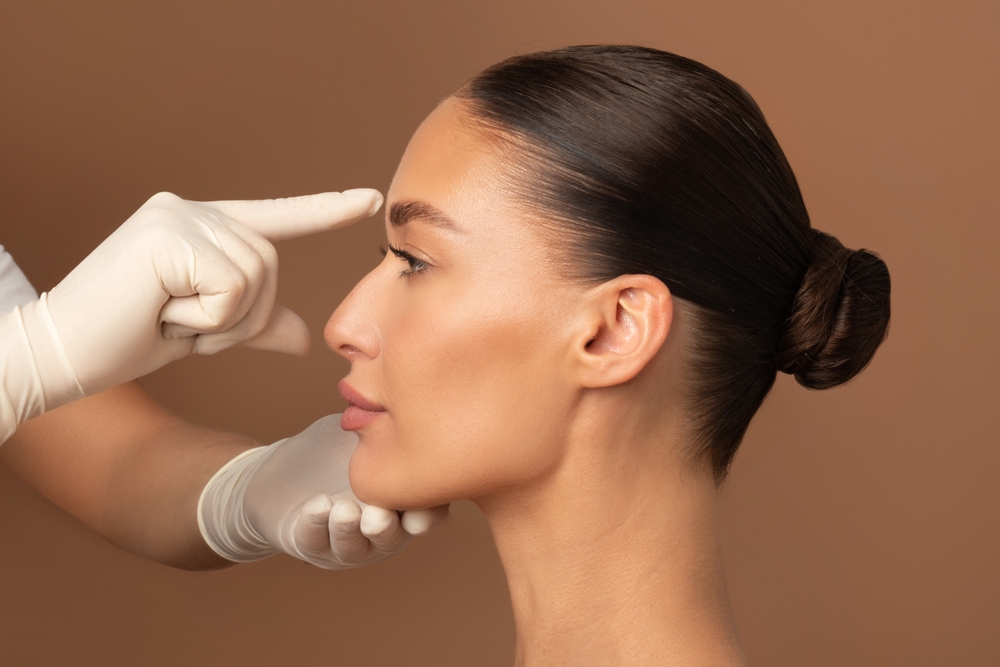
A functional and aesthetic procedure aimed at reshaping the nose and improving overall facial harmony.
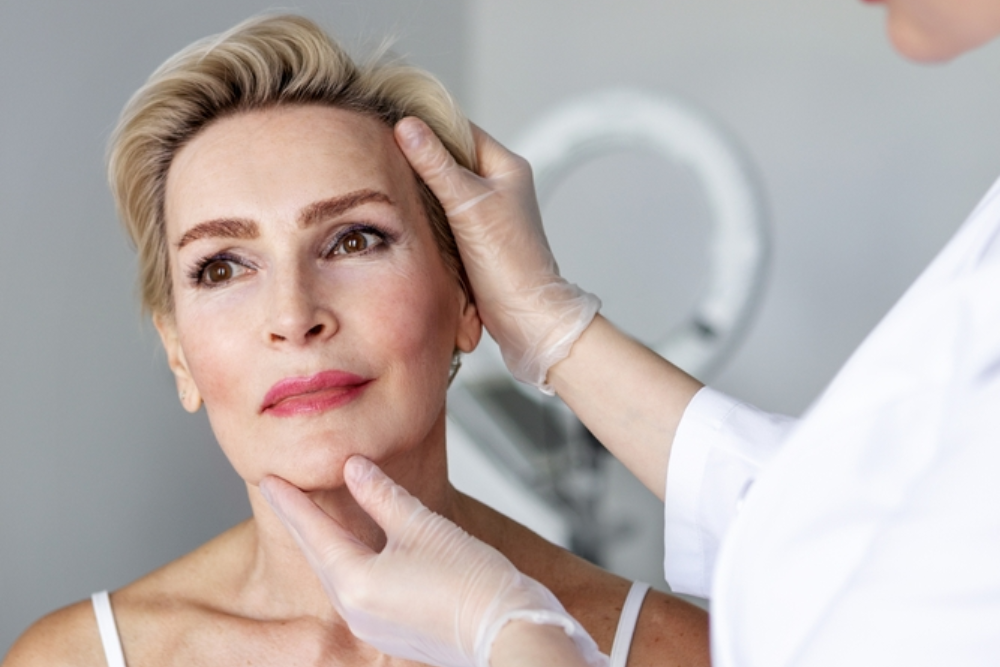
A surgical procedure that repositions sagging tissues to restore the natural contours of the face.
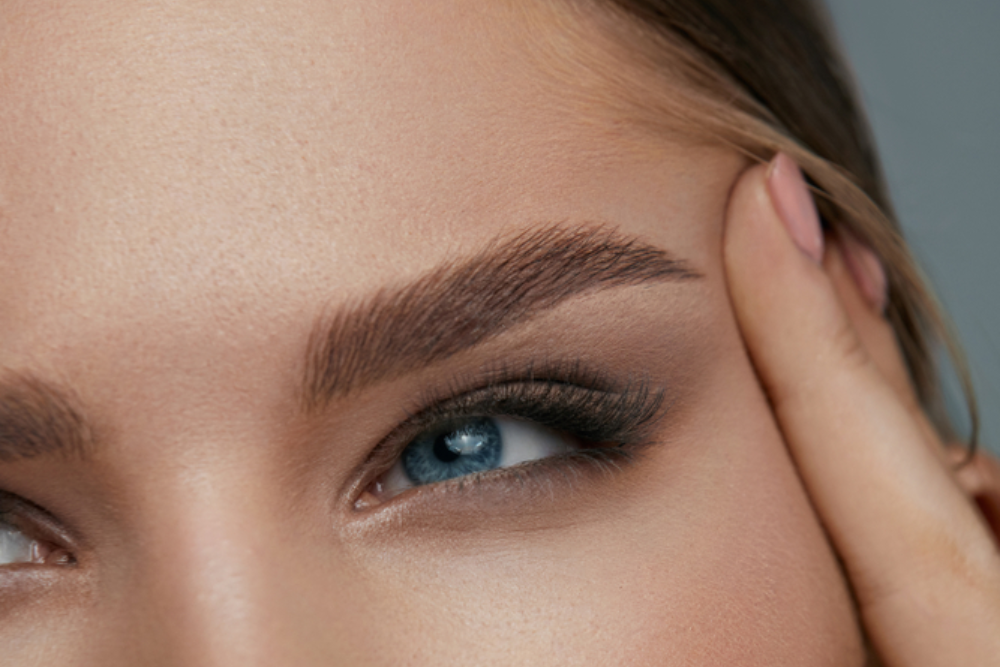
A procedure to reposition the eyebrows and correct sagging, opening and brightening the eyes.
We place experience, medical rigor, and technical precision at the service of safe and personalized care.

